
Recherche
Les recherches les plus fréquentes :
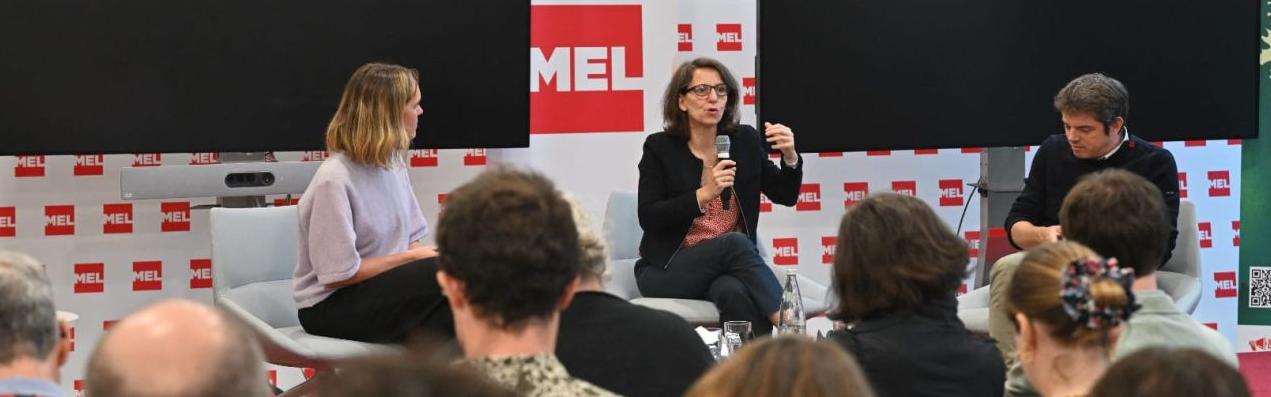
On 11 June 2026, Lille Metropole organised a satellite event of the New European Bauhaus (NEB) Festival as part of its ongoing European Urban Initiative (EUI) project Time2Adapt.
The event brought together European partners, local authorities, practitioners and citizens to discuss a crucial question for the future of European cities: how can cities adapt to a world that is 4°C warmer by making better use of the resources they already have?
The day focused on the concept of time-based urban adaptation, exploring how cities can increase access to cool spaces during heatwaves by rethinking how existing spaces and resources are used, shared and managed.
From European ambitions to local experimentation
The event was opened by Charlotte Brun, Vice-President of Lille Metropole for Climate and Energy Transition, who highlighted how the Time2Adapt project is helping local authorities test innovative approaches to improving urban liveability in the face of rising heatwaves.
Participants then benefited from a European perspective through a presentation by Emilie Vandam from the European Commission’s Joint Research Centre, who outlined the principles and values of the New European Bauhaus. The discussion highlighted how sustainability, inclusion and aesthetics can provide a common framework for designing climate adaptation solutions that are both effective and socially desirable.
The morning also provided an opportunity for Lille Metropole, and its European transfer partners within the Time2Adapt project, Dresden, the Metropolitan Area of Barcelona and Middelburg, to share experiences and discuss how the Time2Adapt methodology is being implemented across different territorial contexts. Representatives from our municipalities Lille and Loos also presented local initiatives aimed at improving access to cool spaces and strengthening urban resilience.

Discovering adaptation in practice
In the afternoon, participants visited several experimentation sites in Lille and Loos where the project is testing innovative ways to activate existing places during periods of extreme heat.
The visits showcased a range of initiatives, including the opening of cultural facilities and public gardens during heatwaves, the temporary use of underutilised indoor spaces, the redevelopment of schoolyards, and the installation of co-designed urban furniture to improve comfort in public spaces.
The value of time as a resource for adaptation
The day concluded with a public conference entitled “The value of time as a resource for living in cities at +4°C”, featuring urban economist Isabelle Baraud-Serfaty and urban planner Sylvain Grisot.
The discussion explored how access to cool spaces is becoming a growing public health and social equity challenge as heatwaves become more frequent and intense. Speakers emphasised that adaptation policies should not focus solely on physical infrastructure, but also on governance, shared responsibility and the ability to activate existing urban resources at the right time and for the right users.


Bringing Lille Metropole’s experience in Brussels
The discussions initiated in Lille Metropole continued the following day in Brussels, where Lille Metropole was invited by the European Urban Initiative (EUI) to participate in an official workshop organised as part of the 2026 New European Bauhaus Festival at the Museum of Art and History.
Alongside the City of Mechelen, Lille Metropole showcased its Time2Adapt project as an example of how local authorities can strengthen climate resilience by rethinking the use of existing urban resources and public spaces.


