
Recherche
The most frequent searches :
Lille Metropole shares European food system projects at the Urban Agenda Partnership Food meeting in Lisbon

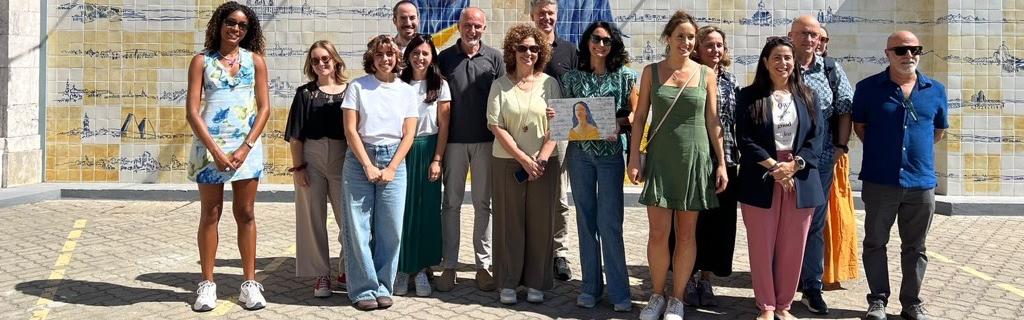
From 17 to 18 September 2026, the 6th Food Partnership In-person Meeting of the Urban Agenda for the EU took place in Lisbon, bringing together cities and metropolitan areas from across Europe, European networks, civil society organisations and academic and research institutions. The meeting provided an opportunity to review the progress of the Partnership’s actions, exchange on key outputs and identify opportunities for further cooperation, dissemination and capacity-building.
For Lille Metropole the meeting offered an opportunity to strengthen its contribution to European discussions on sustainable food systems and to share several projects developed through European cooperation. The Permanent Delegation of Lille Metropole in Brussels participated in the exchanges and presented three European projects: CIRCULANDIA, REGENSOILL and Social Food Web.
European cooperation to support territorial food transitions
Food systems are shaped by a wide range of territorial, environmental, economic and social factors. For metropolitan areas, addressing these challenges requires cooperation across sectors and governance levels, as well as the ability to learn from experiences developed in other European territories.
The Lisbon meeting focused in particular on the development and dissemination of the Partnership’s work and on identifying future advocacy activities and synergies with other European initiatives and projects.
Three European projects presented by Lille Metropole
Lille Metropole shared experiences from three European projects illustrating different dimensions of the transition towards more sustainable and resilient food systems.
CIRCULANDIA was presented as an example of European cooperation around circular approaches and territorial transitions. The project contributes to reflections on how metropolitan territories can move towards more circular models, connecting environmental challenges with local development and resource management.
REGENSOILL, as part of the living labs of the EU soil mission, focuses on soil health and its role in the transition towards more sustainable territories. The project provided an opportunity to highlight the importance of considering soil not simply as a support for human activities, but as a living territorial resource whose preservation and restoration are essential for the resilience of food systems.
Social Food Web offered a complementary perspective by focusing on the relationships and connections that shape local food systems. Its presentation contributed to the broader discussion on how European cooperation can help territories fight against food waste and strengthen more sustainable, resilient and locally rooted food systems.
Together, these three projects illustrate the diversity of approaches that can contribute to territorial food transitions — from circularity and resource management to soil restoration and the strengthening of local food systems.
From European exchange to territorial action
The first day of the meeting offered an in-depth look at inspiring local initiatives focused on regenerative farming practices and on strengthening the connection between land protection, food production and community participation.
Set within 380 hectares of protected landscape, the visit of Quinta do Pisão provided an overview of the historical background of the gardens. Redeveloped by Cascais Municipal Council, it is a living space where nature, agriculture, biodiversity, culture and community come together. Visitors can explore the landscape, discover traditional ways of working the land, learn about the environment, and take part in activities ranging from education and conservation to art and environmental volunteering.
Thus, for Lille Metropole, these exchanges contribute to creating opportunities to disseminate local experience, learn from other territories and identify new avenues for cooperation around sustainable food systems.


