
Recherche
The most frequent searches :
IMPETUS - Rethinking the temporary use of vacant or underused spaces through the Interreg Europe programme
Launched in March 2023 for a four-year period, the IMPETUS project (IMproving local PoliciEs on Temporary UseS) aims to improve the use of abandoned or underused urban spaces. Indeed, when land or buildings are left vacant, for example following the closure of a business, more than ten years can pass before projects enabling new uses are proposed, developed and implemented. The use of a site during this interim period is known as transitional management.
For Lille Metropole, IMPETUS provides an opportunity to integrate the transitional management of spaces within the framework of the New National Urban Renewal Programme (NPNRU). Launched by the French government, the NPNRU supports the transformation of priority neighbourhoods through large-scale urban regeneration projects aimed at improving housing, public spaces, facilities and quality of life while strengthening social cohesion and territorial attractiveness.
The project brings together several partners from Italy (ANCI Toscana, Toscana Region), Spain (Las Palmas de Gran Canaria Municipal Urban Management Company), Romania (Agency for the Development of the Bucharest-Ilfov Region), Poland (Masovia Region), Latvia (Riga City Council) and France, under the coordination of the National Association of Italian Municipalities of Tuscany. It is funded by the Interreg Europe programme with a total budget of €1.2 million, including €208,000 allocated to Lille Metropole.
Building a Metropolitan Approach to Transitional Management
For Lille Metropole, IMPETUS is not only an opportunity to exchange with European peers but also a strategic lever to structure a metropolitan approach to temporary use within urban renewal areas. Through cooperation and experimentation, the project contributes to developing practical and adaptable solutions to activate spaces awaiting transformation.
The objectives for Lille Metropole are fourfold:
Benefit from the exchange of experiences and good practices with European partners in order to inform the development of a metropolitan strategy for transitional management within the framework of the NPNRU;
Bring together local stakeholders involved in the NPNRU and engage them in a collective reflection process;
Build a toolbox providing flexible, innovative and operational solutions for local actors wishing to develop temporary occupation projects;
Experiment with the first temporary use initiatives across the territory.
From European Exchange to Local Action
During the first three years of the project, the metropolis carried out an extensive study to map available sites across the metropolitan area, as well as projects involving the temporary use of abandoned or underused spaces. Exchanges of practices between project partners have since generated valuable insights, particularly regarding space management in a context of demographic decline, drawing on the experience of the city of Riga.
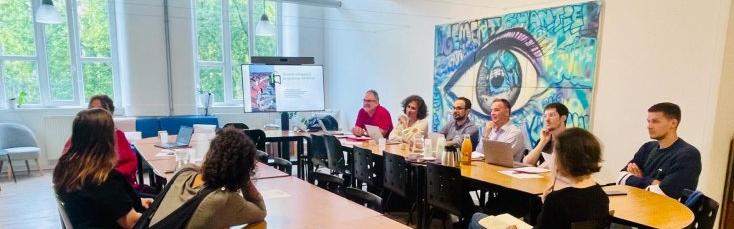
These discussions have highlighted the potential of temporary occupation as a tool to accelerate urban transformation, strengthen local engagement and improve the attractiveness of neighbourhoods undergoing change. They also helped promote Lille Metropole’s approach at European level through the organisation of dedicated seminars and consortium meetings in Lille.
Experimenting New Uses for Urban Transformation
As IMPETUS enters its final phase, Lille Metropole will focus on translating these learnings into concrete actions. In 2026, the metropolis will prepare an action plan designed to facilitate and accelerate temporary uses through operational measures and first pilot projects.
By combining European cooperation, stakeholder mobilisation and territorial experimentation, IMPETUS contributes to giving new momentum to urban renewal policies and to positioning transitional management as a practical and innovative tool in support of the NPNRU.


